Your Cart (0)
Edit Cart XYour cart is empty
Continue ShoppingYour cart is empty
Continue ShoppingWinter is hard on your home’s exterior, even on the parts you rarely look at. Here’s a practical checklist for protecting your roofline, plus what to look for in materials that can handle extreme, persistent weathering while maintaining their appearance.
The clocks have gone back, the evenings are drawing in, and the first proper storms of the season aren’t far off. Most of us think about boilers and draught excluders at this point, but your home’s exterior takes the worst of winter, and the roofline is where problems tend to start.
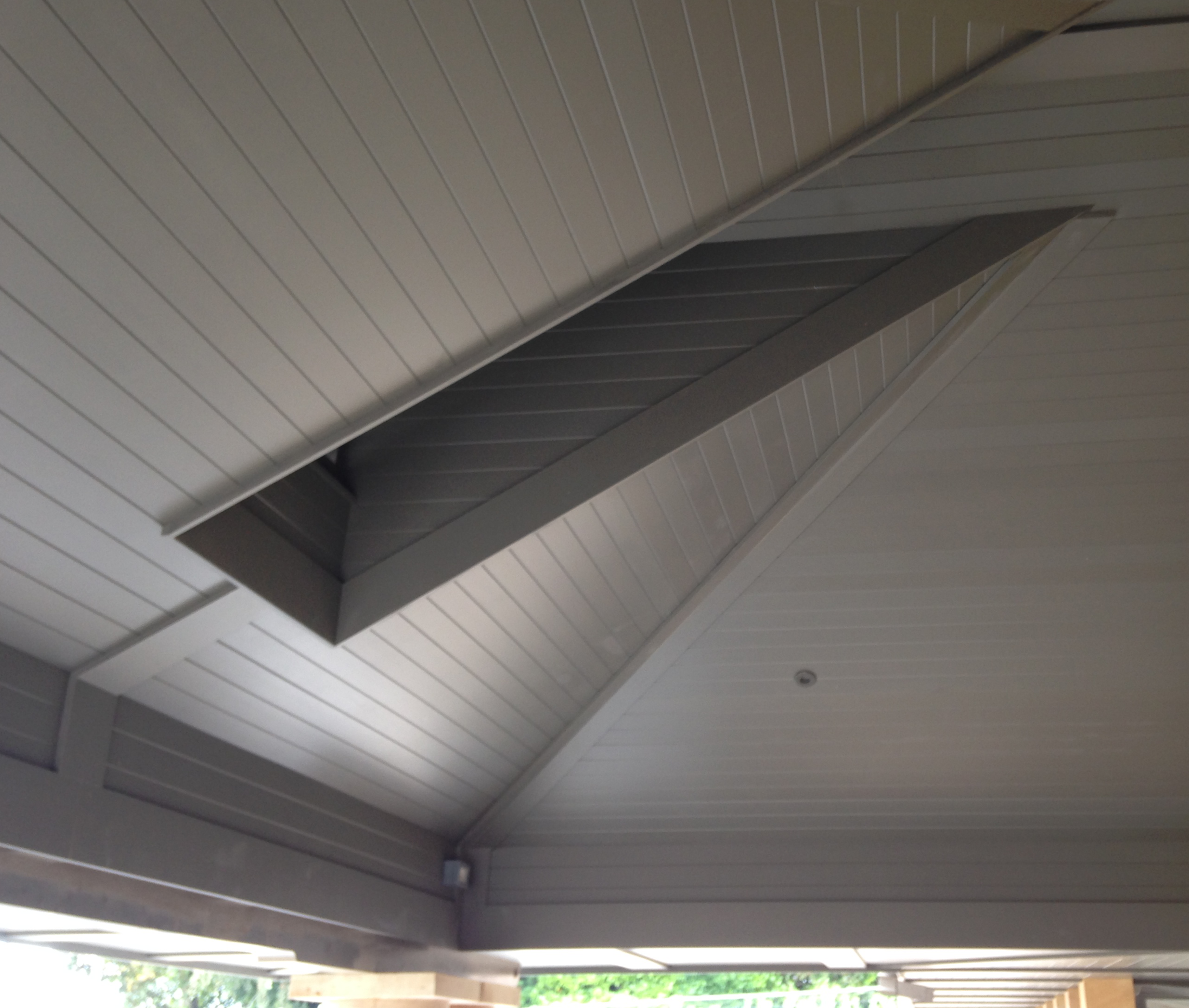
Fascias and soffits are easy to ignore. They sit high up, out of sight, until something goes wrong. But they protect the ends of your rafters, support your guttering, and help keep moisture and pests out of your roof space. If they’re old, swollen or poorly sealed, a wet winter will find a weak spot, ruining the look of your roofline at the same time. Clean gutters and fresh fascias and soffits all contribute to not only the appearance, but the structural integrity of a home. Without meaningful maintenance and carefully selected materials, harsh winter weather will destroy the look and construction of your exterior.
Here’s how to get your exterior ready before the weather turns.
On a dry day, take a walk around the house and look closely at your fascias and soffits. You’re looking for:
• Peeling or flaking paint, which lets moisture reach the material underneath
• Soft, swollen or darkened patches, a common sign of water getting in
• Cracks or gaps at joints and corners
• Sagging or loose sections, especially where guttering is attached
• Staining below the gutter line, which can point to overflow or leaks
Small issues are far more cost efficient to deal with in November than in February, when repairs are harder and the weather is less forgiving.
According to an article posted by RCI, one in ten homeowners say they never clean their gutter, and only 41% do it once per year, which leads to drainage problems and affects the integrity and appearance of the roofline. Blocked gutters are one of the biggest causes of winter roofline damage. When leaves and debris stop water flowing away, it can overflow and run down the back of the fascia and across the soffit. Over time, that constant dampness can rot timber and lift paint.
Once the leaves have mostly fallen, clear out the gutters and check that downpipes are running freely. Do it again in mid-winter if you have overhanging trees.
Wind-driven rain gets into any gap it can find. Check that:
• Joints between fascia boards are tight and sealed
• Soffit vents are clear, because efficient ventilation is key for keeping your roof space dry
• Fixings haven’t worked loose or corroded
If something is moving in the wind now, it will be worse after a few storms.
If your home has timber cladding, give it the same once-over. Look for failing paint or coatings, open joints and any areas where water might be sitting rather than draining. Ground-level boards deserve extra attention, as they take the most splashback.
MEDITE TRIMAX is a cladding board specifically designed for long-term durability with little dimensional movement when exposed to high levels of moisture and extreme weathering. With a 50-year guarantee on the base panel, you can feel confident that the integrity of the substrate will stay intact through the worst kinds of weather, with minimal maintenance required to maintain its sleek appearance.
Here’s the uncomfortable truth: if you’re repainting and patching the same fascias every year, the real problem may be the core material rather than the maintenance.
Traditional timber moves with changes in moisture and temperature. It swells, shrinks and eventually lets coatings fail, which is exactly what a British winter encourages. Alternatives such as uPVC and fibre cement cladding are durable enough, but being hard to work with opens up challenges down the line, and incorrect installation can be extremely detrimental to the long-term maintenance demands of the material. Standard options each have their own drawbacks, whether that’s frequent repainting or a look that doesn’t suit your property.
This is where engineered timber alternatives are worth a look, and why they’re making such big strides in the market. MEDITE TRIMAX is manufactured using MEDITE TRICOYA EXTREME, a specially engineered timber panel built from acetylated wood fibre. The process of acetylation changes the molecular makeup of the wood fibre, so it won’t swell or warp when exposed to moisture or even in direct contact with rain; the finished product is designed for outdoor use where humidity, temperature swings and changeable weather are the norm. Acetylated panels are the perfect material for protecting all elements of your roofline and giving your exterior a clean look, thanks to their high durability and superior dimensional stability.
Why MEDITE TRIMAX is perfect for your exterior:
• Ready for the weather: TRIMAX cladding boards are available primed or fully finished, giving you design flexibility and assurance of quality
• Neat appearance, whatever the weather: the boards offer a crisp, uniform look, and fascias and soffits come fully finished in white as standard
• Hassle-free installation: it’s lightweight and straightforward to install, which can shorten time on the scaffold, a plus when installing in damp, wet conditions on site
• Long-term confidence: the base panel, manufactured from MTX, carries a 50-year warranty above ground, and the same sharp quality is designed to last the lifespan of the building with minimal maintenance
As with any product, installation and care are vital, so make sure to follow MEDITE TRIMAX’s technical guidelines (found on the product pages) to give cladding boards the proper attention they need to maintain their sleek appearance.
If your inspection turns up more than a quick fix, don’t leave it until spring. Autumn is a good time to get quotes and book a contractor, since many roofline and cladding jobs can go ahead in settled winter weather, and you’ll avoid the rush when everyone else notices their problems in March.
Your exterior winter-prep checklist
• Inspect fascias, soffits and cladding for damage
• Clear gutters and check downpipes
• Re-seal gaps and tighten loose fixings
• Make sure soffit vents are unblocked
• Note anything that needs replacing, and get quotes now
The bottom line
A little attention now can save you from damp, rot and expensive repairs later. Spend an hour on your exterior this month, and if your roofline is already past its best, consider replacing it with a material built to cope with what winter throws at it.
Thinking about a roofline or cladding upgrade? View our TRIMAX cladding, fascia, and soffit product lines below: